




Access advice to guide your steps
Australian home values fell 1.1% in September. That's the sixth monthly fall in a row, and it leaves the national index 5.2% below its March peak, according to Cotality's Home Value Index.
Here's the part that rarely makes the headline: over the last 12 months, national values are unchanged. In plain terms, the typical Australian home is worth about what it was a year ago. The index climbed quickly into March, and the falls since have given most of that run back.
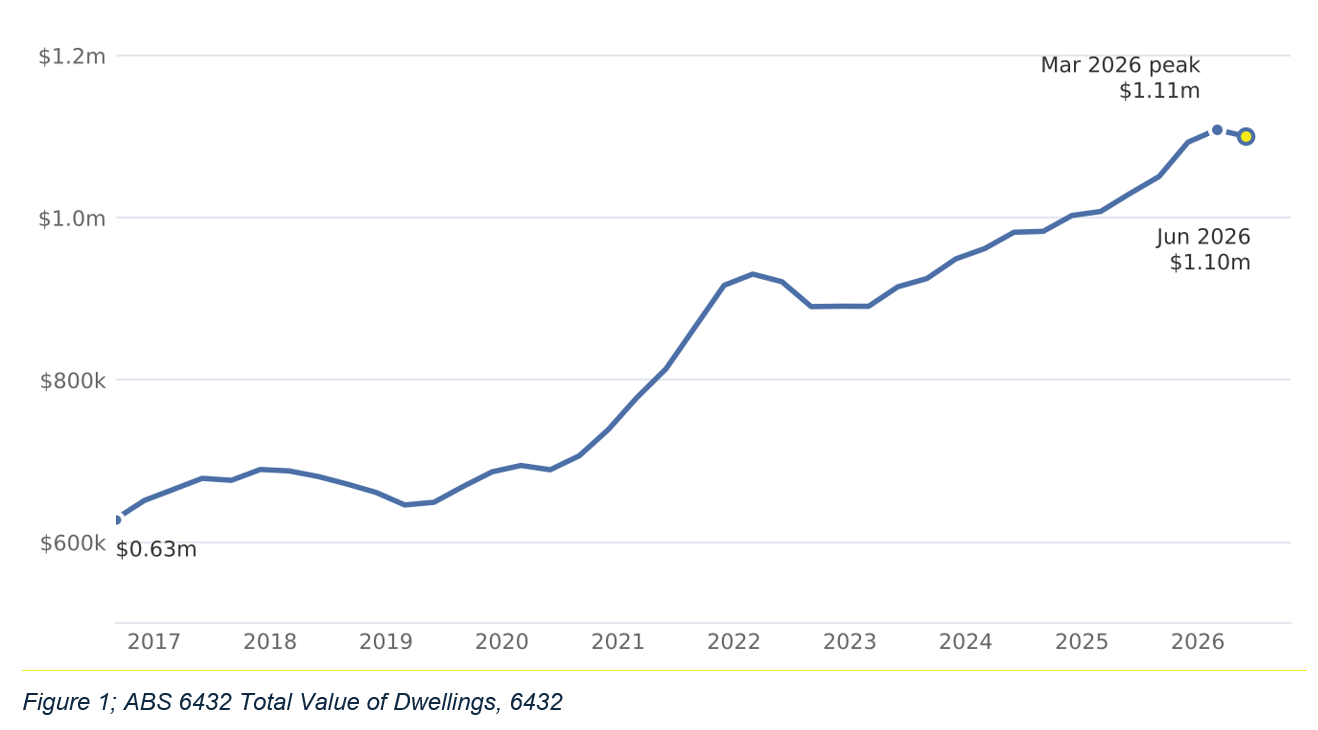
Three numbers came out of the same release:
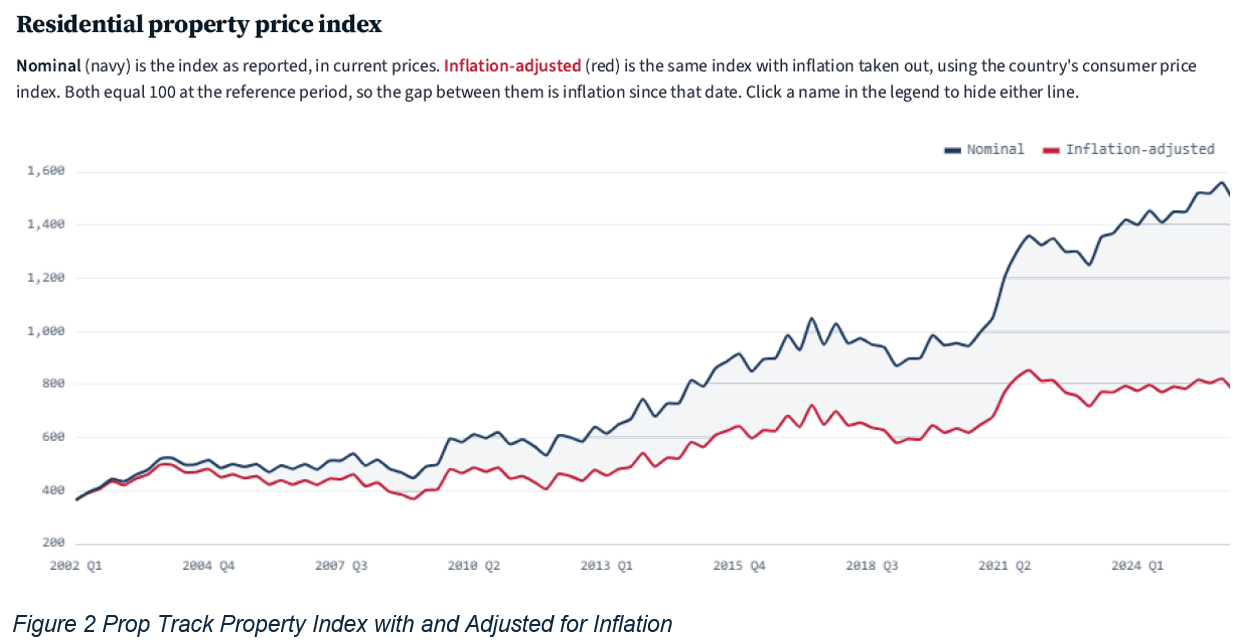
Not every index agrees. Another widely used index (PropTrack) has national values about 3.3% below their peak, and down only 0.2% for September. The two use different methods and data, so treat any one figure as an estimate, not a fact.
"97% of suburbs fell" is about breadth, not depth. It's true over the three months to September, but it tells you how widespread the falls are, not how large. A suburb down 0.5% and a suburb down 8% both count.
National averages hide a lot. Sydney is about 8.6% below its February peak. Brisbane is about 5.4% below its May peak, yet still up about 6% on a year ago. Darwin rose. If you own one home in one suburb, the national number is only a rough guide.
None of this means everything is fine, and we'd be doing you a disservice if we said so.
• Buyers have stepped back. Cotality estimates sales are about 19% below a year ago across the country. Homes in the capital cities are taking around 39 days to sell, up from 23. Auction clearance rates were about 49% in mid-September, compared with about 72% a year earlier.
• Rates just went up again. The RBA lifted the cash rate to 4.60% on 29 September, the fourth rise this year. The major banks are passing it on from 9 October. On a typical new mortgage of around $730,000, that's roughly another $120 a month. For households already stretched, that's real.
• Nobody knows where this ends. One major bank economist expects about a 9% fall from peak to trough nationally. Cotality's research director has suggested 10% to 15% is a reasonable estimate. Others are less pessimistic. Forecasts are educated guesses, and they've been wrong in both directions before.
On the other side of the ledger, the RBA's latest Financial Stability Review found that fewer than 1% of borrowers are in negative equity, and around 2% of variable-rate owner-occupiers are short on cash flow. It also found the typical borrower has enough in offset and redraw to cover more than a year of scheduled repayments. Those figures were collected before the latest rate rise, so they're a snapshot, not a guarantee. But there's no sign yet of a wave of forced selling, which is what turns a slow market into a crash.
We're not real estate agents, and we don't pretend to predict house prices. But we work in this postcode (4500) every day, so we had a look at the local numbers.
Cotality's figures for our postcode over the 60 days to around 21 September tell a consistent story:
• Fewer new listings, down about a tenth.
• Fewer sales, down about a quarter.
• Homes taking longer to sell, about eight weeks on average, up about a fifth.
• Sellers conceding roughly 5% off their asking price.
What the numbers don't show is prices. They show a quieter market where buyers are choosier and sellers are negotiating. And it's a small sample: around 75 sales in two months means a couple of busy or quiet weeks can swing the percentages a long way.
Our read: a slower market, not a collapsing one. We'll keep watching it, and we'd rather tell you what the data shows than what makes a better story.
A market that rose about 5% and then gave most of it back doesn't generate clicks. "Biggest downturn in decades" does. Neither headline is a reason to change your plan on its own.
The more you understand what the numbers measure, the less likely a headline is to make your decisions for you. A few questions are worth asking instead of reacting:
• Do I need to sell or buy in the next few years, or is this a number on paper?
• Can I comfortably meet my repayments if rates rise again?
• Does my plan still work if values stay flat for a while?
Good plans are built to survive a few rough years. The point of having one is that you don't have to rebuild it every time the news turns.
If you're feeling the squeeze from higher repayments, thinking about buying or selling, or you're just not sure what this means for your own plan, get in touch before you act. A conversation costs far less than a rushed decision.



This website may contain general advice, but does not take into account your objectives, financial situation or needs. You should consider whether the advice is suitable for you and your personal circumstances. Before you make any decision about whether to acquire a certain product, you should obtain and read the relevant product disclosure statement. In the event that Funded Futures Financial Services is providing personal advice it will be communicated via a ‘statement of advice’.
Funded Futures Financial Planning ABN 81 646 656 804 T/A Funded Futures Financial Services is a Corporate Authorised Representatives and is authorised through Cobalt Advisers Pty Ltd ABN 64 628 654 099 who is an Australian Financial Services Licencee # 512550.
© 2024 Funded Futures | All Rights Reserved | Developed by
