




Access advice to guide your steps
When we build a financial plan, we’re really answering one big question:
“What are the chances I’ll be okay?”
To answer that properly, we need to talk about how financial projections are created. There are two main ways to model the future:
Deterministic modelling
Stochastic modelling (Monte Carlo simulation)
They sound technical — but the difference is simple.
Deterministic modelling assumes a fixed rate of return each year.
For example:
Superannuation returns 7% per year.
Inflation is 3% per year.
Your income grows at 3% per year.
The model then projects one smooth line into the future.
It gives you one answer.
The problem?
Real life doesn’t deliver smooth returns. Markets rise, fall, and sometimes stall for years.
Deterministic modelling shows you one possible future — assuming everything behaves perfectly.
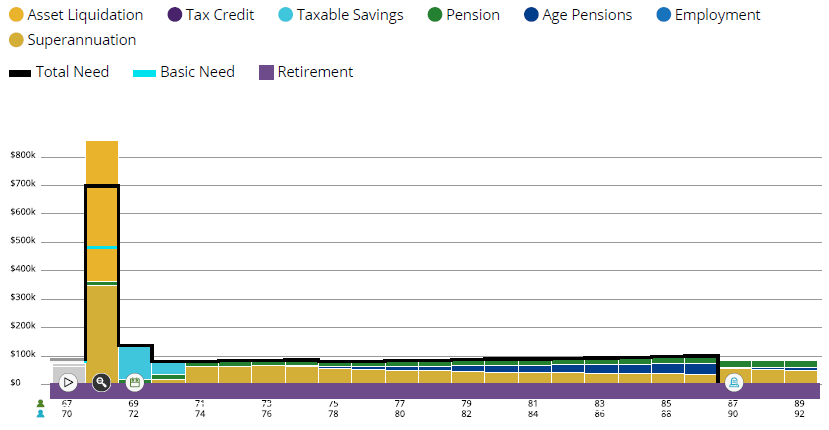
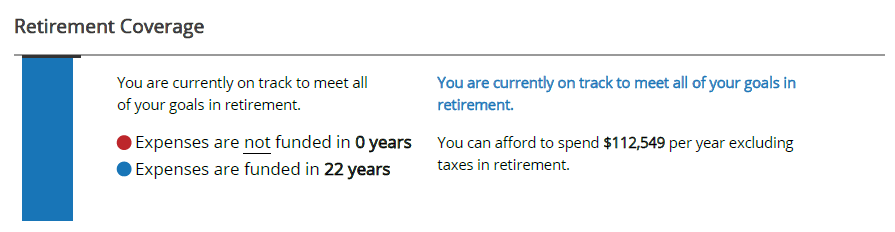
At Funded Futures Financial Services, we prefer to model uncertainty.
Instead of assuming a steady return, we:
Use historical volatility data
Apply probability distributions to investment returns
Run thousands of different market sequences
This process is called a Monte Carlo simulation.
Rather than showing one future, we simulate thousands of possible futures.
Some are strong.
Some are average.
Some are challenging.
From that, we calculate something far more meaningful:
The probability of achieving your goals.
Due to software and modelling limitations, we can only apply full stochastic (Monte Carlo) modelling from age 60 onwards.
Before age 60, projections are built using deterministic assumptions.
Why?
Because the modelling engine that runs thousands of randomised retirement income scenarios is specifically designed for the retirement phase — where:
Investment returns matter most
Withdrawal rates become critical
Sequence of returns risk becomes significant
Longevity risk needs to be tested
The retirement phase is where variability has the greatest impact on outcomes. That’s where probabilistic modelling adds the most value.
Before age 60, the modelling still provides a structured and realistic projection — but it does not simulate thousands of market paths.

Even though stochastic modelling starts at age 60, your overall strategy is still:
Built conservatively
Reviewed regularly
Stress-tested through scenario analysis
Adjusted as life changes
Financial planning is not a one-time projection — it’s an ongoing process.
As you approach retirement, we transition fully into probabilistic modelling so we can properly test:
Income sustainability
Market downturn scenarios
Longevity outcomes
Spending flexibility
That’s when the detail matters most.
When we show you something like:
“You have a 78% probability of achieving your retirement objective.”
That means:
We ran thousands of possible retirement market scenarios.
In 78% of those futures, your plan succeeded.
In 22% of those futures, adjustments would likely be required.
It does not mean you will fail 22% of the time.
It means your plan has resilience — but also sensitivity to risk.
That allows us to have practical conversations about:
Retiring earlier or later
Adjusting savings rates
Changing asset allocation
Modifying retirement spending
Building contingency buffers
It becomes strategy — not guesswork.



This website may contain general advice, but does not take into account your objectives, financial situation or needs. You should consider whether the advice is suitable for you and your personal circumstances. Before you make any decision about whether to acquire a certain product, you should obtain and read the relevant product disclosure statement. In the event that Funded Futures Financial Services is providing personal advice it will be communicated via a ‘statement of advice’.
Funded Futures Financial Planning ABN 81 646 656 804 T/A Funded Futures Financial Services is a Corporate Authorised Representatives and is authorised through Cobalt Advisers Pty Ltd ABN 64 628 654 099 who is an Australian Financial Services Licencee # 512550.
© 2024 Funded Futures | All Rights Reserved | Developed by
